How People Find Local Businesses in 2026 (And Why Your Website Might Be Invisible)
Someone in Liverpool just searched "who builds websites for restaurants near me." Your name didn't come up.
Not because you don't do that work. Not because you don't rank. But because AI answered the question before they ever saw a list of results and your site gave it nothing useful to work with.
This is the shift most small businesses haven't caught up to yet. In 2026, it's costing them leads.
What's Actually Changed in Search
For the last decade, SEO was about getting into the top 10 results on Google. You optimised your pages, got some links pointed at you, and hoped someone clicked your result over the next person down the list.
That model is under serious pressure.
Up to 25% of search queries are now being answered directly by AI, through Google's AI Overviews, ChatGPT, Gemini, and voice assistants. The user asks a question. They get an answer. They may never see your website at all.
If you're not structured to appear in those answers, you're invisible to a quarter of your potential customers before the search even starts.
What Answer Engine Optimisation Actually Means
Answer engine optimisation (AEO) is the practice of making sure AI systems can understand, extract, and cite your business when someone asks a relevant question.
It's not a magic trick. It's not a bolt-on to your current strategy. It's a set of structural decisions about how your website is written and how your business appears online.
The core elements:
Your Google Business Profile needs to do more work. AI search engines pull heavily from your GBP when answering local queries. Accurate categories, clear service descriptions, recent photos, and up-to-date contact details are no longer optional. A flat, neglected profile means you're not in the running.
Your content needs to answer questions directly. AI doesn't favour vague pages. It prefers specific answers: what you do, who for, where, and at what kind of price point. If your homepage says "we create beautiful digital experiences," that tells an AI system almost nothing useful.
Structured data helps AI understand you. Schema markup, including LocalBusiness and Service schema, gives AI a structured description of your business it can extract and cite. Most small business websites in Liverpool have none.
NAP consistency matters more than ever. Name, address, phone number: if these are inconsistent across your website, Google Business, and any directories, AI systems get confused about who you are and where you operate. Confused systems don't recommend you.
What This Looks Like in Practice
I looked at a local restaurant site recently. Ranking on page 2 for a few decent keywords, but absent from every AI answer panel for relevant searches. Why?
The homepage had no clear service description. The Google Business Profile hadn't been updated in over a year. There was no schema markup anywhere on the site. And the location, Liverpool city centre, wasn't mentioned anywhere in the on-page copy.
When someone asked Google's AI "where can I find a good Italian restaurant near Liverpool docks," the AI had almost nothing to pull from that site. It answered using a competitor with a fresher, better-described GBP.
Three targeted changes: updated GBP with fresh photos and correct categories, added LocalBusiness and menu schema, rewrote the homepage intro to include specific location references and services offered. Within 8 weeks, the site started appearing in AI answer panels for relevant local queries.
It's not complicated. But it requires knowing what you're changing and why.
The Opportunity Right Now
Most small business websites in Liverpool are built for the search environment of 2019 or 2020. Reasonable design, basic on-page SEO, not much else. The gap between where they sit and where AI-driven search requires them to be is significant.
That's actually an opportunity if you move on it now. The businesses that get this right in 2026 build a structural advantage that compounds as AI search becomes the default way local customers find services. The ones that wait will find themselves playing catch-up in a much more competitive landscape.
Where to Start
Audit your Google Business Profile. Is it accurate, complete, and recently updated? Does it clearly mention what you do and where you're based?
Check your homepage copy. Does it clearly say what you do, who for, and where? If an AI scraped only that text, would it understand your business?
Add schema markup. LocalBusiness schema at minimum. Service schema if you have defined service offerings. A Webflow developer can add this cleanly without touching your visual design.
Check your NAP consistency. Google yourself. Find everywhere your name, address, and phone number appear online and fix any inconsistencies.
The Bigger Picture
This isn't about chasing an algorithm. It's about making it easy for the right people to find you, in the way they're actually searching right now.
AI hasn't changed what people want. Someone in Liverpool still needs a web designer, a restaurant near the docks, or a solicitor in town. What's changed is how they ask, and where the answers come from.
Your job is to be the answer.
If you're not sure whether your site is structured for how search works in 2026, send me a message. I'm happy to take a look.
Your next stage of growth deserves more than quick fixes.
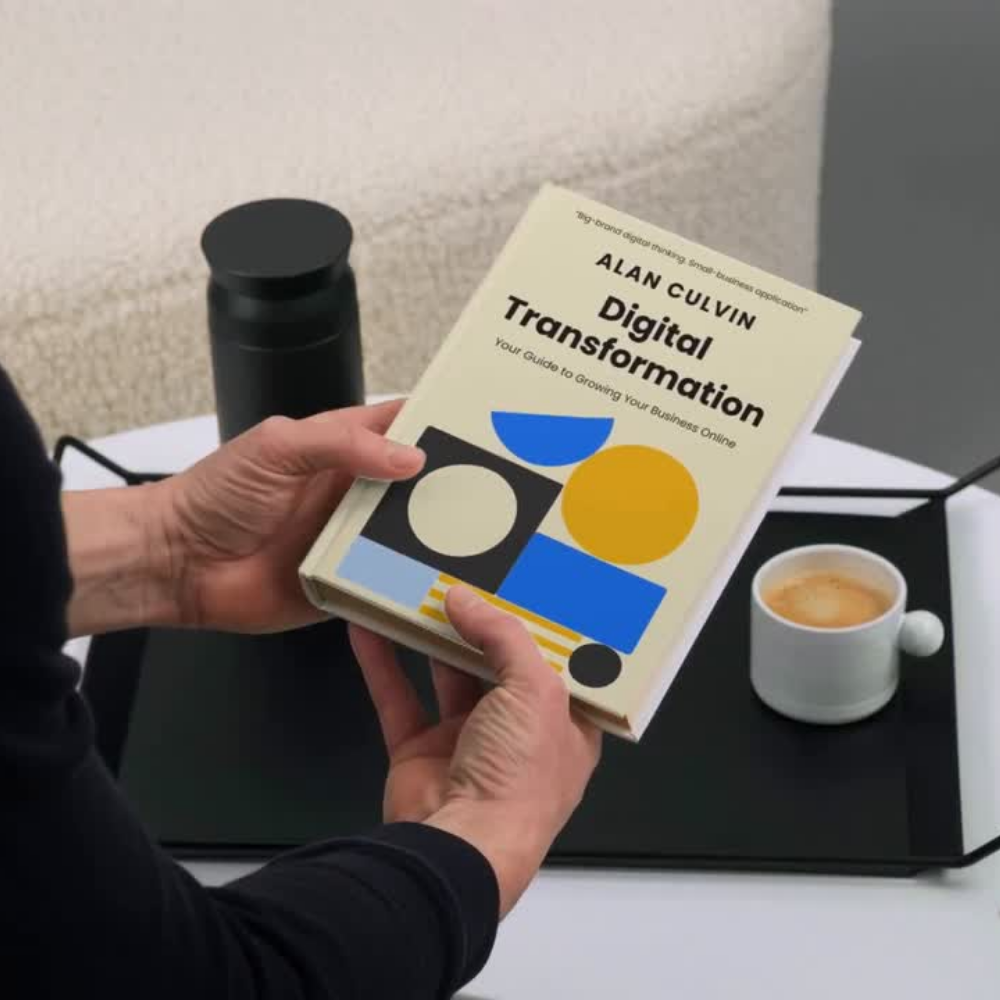
Oh yeah, i also wrote a book that tells you how to do it too... and it's free!
I’ve made this guide completely free for small business owners who want to modernise their website, systems, and digital tools without burning time or budget.
Inside, you’ll learn what really matters, what to ignore, and how to make confident digital decisions that support sustainable growth.
Trusted by businesses we’ve partnered with.
“Two Bears didn’t just redesign our website, they helped us rethink how the business works online. From authentication and trade pricing to UX, discounts, and automation, everything was approached with clarity and purpose. The end result is a platform we trust to support growth, not just look good.”
“Two Bears helped us turn our website into a proper lead-generation tool. The focus was on clarity, trust, and explaining our offer in a way customers actually understand. From structure and UX to content and SEO foundations, everything was approached strategically rather than just visually.”
A creative partner for long-term digital growth.